logo
  • Home
  • Book Content
  • Author
  • Press Kit
  • Maps and Diagrams
  • Videos
  • Blog
Fukushima and the coming Tokyo Earthquake Logo
04 Apr2026

Estimates on a quake directly below Tokyo

April 4, 2026. Written by Tony Smyth. Posted in Blog

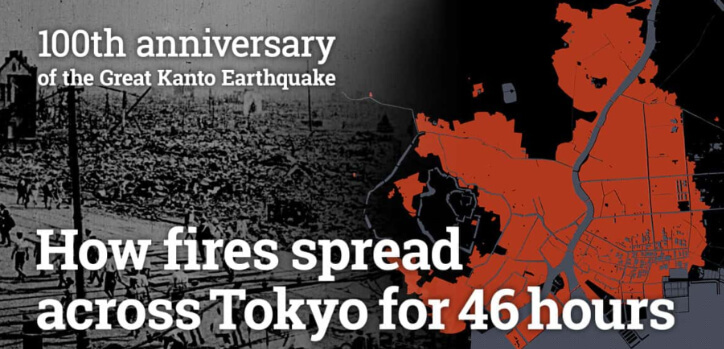
A Japanese government panel estimates that a powerful earthquake striking directly beneath Tokyo could kill up to 18,000 people and cause damage worth about 83 trillion yen, or about 533 billion dollars. The panel warned the disaster would be on a national-crisis scale and called for society-wide efforts to mitigate the impact.

The latest assessment examined 24 possible quake scenarios: under one scenario, in which a magnitude 7.3 quake strikes directly beneath the southern part of central Tokyo, a wide area including Tokyo and its neighboring prefectures of Saitama, Chiba and Kanagawa is estimated to experience shaking of at least lower 6 on the Japanese seismic intensity scale of zero to 7. Some areas could record the maximum intensity of 7.

The estimate says that in a worst-case scenario, with such a quake occurring on a windy winter evening, the death toll could rise to 18,000 and 400,000 buildings could be destroyed by shaking or burned down. The assessment adds that about 70 percent of the damage would be caused by fires.

The projected death toll and number of damaged buildings are each about 20 and 30 percent lower than in the previous estimate, reflecting progress in making homes more quake-resistant and reducing densely built-up areas. Still, the estimated damage would be devastating.

Continue Reading No Comments

04 Apr2026

Little progress in debris removal at Fukushima Dai-ichi

April 4, 2026. Written by Tony Smyth. Posted in Blog

It is estimated that a total of 880 tons of fuel debris, consisting of molten fuel mixed with surrounding structural components, remains in the No.1, 2 and 3 units.

In the decommissioning timetable released in 2011, the government and the plant’s operator, Tokyo Electric Power Company, laid out a plan to begin removing radioactive fuel debris by 2021 and complete the work by 2036.The operator plans to begin full-fledged removal of the debris from the No.3 unit, but the starting year is expected to be pushed back to fiscal 2037 or later, far behind TEPCO’s initial target of completing the work by 2036. It is not clear whether the government and the operator will be able to achieve the decommissioning goal by 2051.

Meanwhile, at the Hamaoka plant, 200km south-west of Tokyo

A Japanese power plant operator has admitted to cherry-picking critical safety data to pass the screening process of the nuclear safety regulator to restart two of its offline reactors

Chubu Electric said on Monday that it had set up an independent panel of experts to investigate possible misconduct in compiling data as part of a process to restart two reactors at the Hamaoka nuclear power plant.The plant originally had five reactors but two were permanently shut down in 2009. The remaining three reactors were taken offlinein the wake of the 2011 Fukushima disaster.

Concerns about data manipulation mean the power plant is unlikely to restart anytime soon. It’s also a likely setback for Japan’s efforts to shift back to nuclear power to boost energy security. Chubu told regulators it had selected an earthquake wave model closest to the average of 20 possible patterns to calculate the Hamaoka plant’s “standard seismic motion”, the maximum shaking the reactors could withstand. However, the company admitted, employees in charge could have deliberately chosen that model to make the plant appear safer and speed up the screening process. The regulator learned about this after it was contacted by a whistleblower.

The Hamaoka power plant has been described as the “world’s most dangerous” nuclear power facility by some seismologists and anti nuclear campaigners. Government forecasts have predicted an 87 per cent chance of a powerful quake in the area, which sits on two major subterranean faults. A major accident would be likely to force the evacuation of Greater Tokyo, home to 28 million people.

One Japanese assessment stated that such an incident would devastate a broad area between Tokyo and Nagoya, destroying more than 200,000 buildings and resulting in a huge tsunami.

Is nuclear energy becoming popular again?

At its peak in the 1980s, nuclear power represented around 17% of the total global electricity generation mix, but its share began to wane after the Chernobyl disaster in 1986. After the Fukushima disaster, nuclear power dropped to roughly 9% of global electricity supply and has remained at about that level ever since.

Now, however, conditions appear to be primed for the construction of nuclear power plants to accelerate. In May, President Donald Trump signed executive orders to accelerate nuclear adoption in the US. By lowering regulatory and cost barriers to entry and providing funding for nuclear plants, the orders target an expansion of nuclear power in the US from around 100 GW today to 400 GW by 2050.
Meanwhile, China plans to build 150 nuclear reactors over the next 15 years, with the target of reaching 200 GW of nuclear power by 2035, according to China’s 14th Five-Year-Plan.

Why is nuclear energy growing?

There are currently 61 nuclear reactors under construction across 15 different countries, with roughly half of them located in China. Lee and Davenport’s report points out that 59 of those are scheduled to come online in or before 2032.

In addition, there are roughly 85 reactors planned across the globe, with another 359 proposed. “While we do not anticipate all of these planned and proposed reactors to come online.

Continue Reading No Comments

03 Jun2025

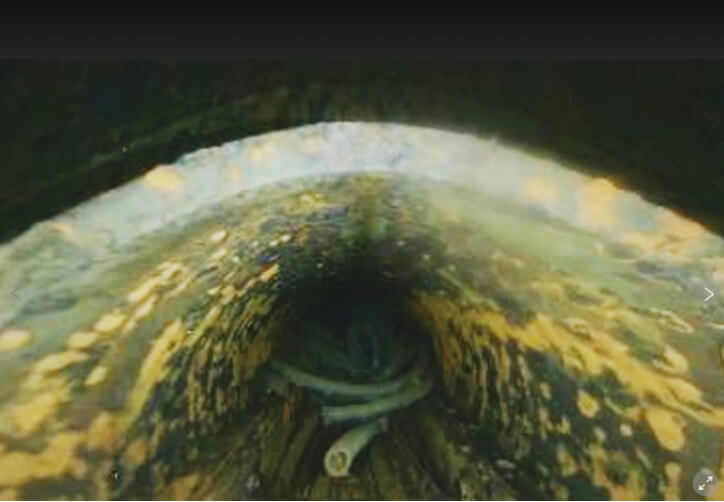
A tong-like device makes contact with what is believed to be melted nuclear fuel inside the No. 2 reactor’s containment vessel

June 3, 2025. Written by Tony Smyth. Posted in Blog

It’s hard to believe that it has now been over 14 years since the 2011 quake and meltdowns. Lets have a look at future world trends concerning nuclear power. Nuclear’s share of total electricity generation is projected to decrease: the International Energy Agency (IEA) projects a 22% increase in nuclear generation by 2050, but this will be less than the projected growth of renewable energy, resulting in nuclear’s share of global electricity generation falling from about 10% currently to about 8% in 2050.

However, just as I was about to post this, news from Germany: Three weeks after widespread power grid failures across Portugal and Spain, triggered by unreliable solar and wind power, Germany appears to be sharply recalibrating its energy stance. In a notable policy shift, the new conservative government has reversed its longstanding opposition to nuclear power. The move reflects a growing understanding in Berlin that over-reliance on unreliable solar and wind power generation poses serious risks to economic stability and energy security (lack of access to cheap Russian fossils would be another important reason). The shift also signals a broader return to common-sense energy policymaking in Europe, with nuclear power increasingly viewed as critical in France in achieving reliable, low-carbon power generation.

Next, a point I wasn’t aware of when writing my book, is the consequences of the fact that nuclear power only produces electricity, as do renewables. I stumbled upon an important interview with petroleum/geology specialist Art Berman in which he points out that even fusion power, if it can be harnessed, will still only produce electricity, yet key areas that keep our current civilisation functioning require process heatin continuous mass quantities. Specifically, fertilisers, plus steel, petrochemicals, concrete,  and plastics: all need tremendous amounts of heat; heat that, at the moment, comes from burning coal. Heavy industry is responsible for around 22 percent of global CO2 emissions. Forty-two percent of that — about 10 percent of global emissions — comes from combustion to produce large amounts of high-temperature heat for industrial products like cement, steel, and petrochemicals.

Meanwhile Japan: what changes have occurred in Japan in the last two years? A recent survey by the Asahi Shimbun newspaper showed 51% of respondents favoured restarting nuclear plants, with 42% opposed. This is a major change in sentiment compared to the initial years after the meltdowns, when almost every Japanese citizen was vehemently opposed to using nuclear power.

In a draft strategic energy plan due to be approved by the Japanese cabinet, the trade and industry ministry signalled it was ditching attempts to lessen Japan’s reliance on nuclear power in the wake of the Fukushima disaster.The document dropped a reference to “reducing reliance” on nuclear energy and instead called for a “maximisation” of nuclear power, which will account for about 20% of total energy output in 2040, based on the assumption that 30 reactors will be in full operation by then.The plan envisages a share of between 40% and 50% for renewable energy – compared with just under a third in 2023 – and a reduction in coal-fired power from the current 70% to 30-40%. In other words, a mixed source of energy supplies, with renewables as the most dominant; also a large reduction in Japan’s expensive imports of fossil fuels which must be paid for in dollars.

Speaking of renewables, Japan has completed the successful deployment of its first megawatt-scale tidal turbine, the AR1100. Installed in the Naru Strait (Nagasaki Prefecture), this 1.1 MW tidal turbine represents a major breakthrough in marine energy technology. As Japan moves towards a sustainable, fossil-fuel-free future, tidal energy is poised to play a crucial role in the country’s energy transition.

Meanwhile, progress in de-commissioning the stricken Fukushima Dai-ichi reactors proceeds incrementally. Investigators used the robot’s fishing-rod-like arm to clip and collect a tiny piece of radioactive material from one of the plant’s three damaged reactors – the first time such a feat has been achieved (see image above).

The tiny sample will be studied for clues about conditions inside the reactors – a crucial step towards decommissioning the Dai-ichi plant. About 880 tons of extremely hazardous melted material remain within, 14 years after two tsunamis caused by a 9.0-magnitude earthquake overwhelmed the plant, destroying all power systems designed to cool the reactor cores.

Removing debris from the reactors is regarded as the most daunting challenge in the decades-long decommissioning project. The robots are small, must navigate debris-laden and and waterlogged reactor buildings that are extremely radioactive, scrape off tiny amounts from 880 tonsof melted nuclear fuel, then bring it out of the ruins, all without releasing radioactivity into the air. Completion of total plant de-commissioning by 2051 seems seriously over-optimistic.  By November 2022 around $82 billion had already been spent to deal with the 2011 disaster.

Continue Reading No Comments

15 Apr2021

The clock that stopped

April 15, 2021. Written by Tony Smyth. Posted in Blog

Interesting story from Miyagi, the prefecture north of Fukushima that was also hit by the devastating tsunamis in 2011. It seems that the head monk at a temple there had bought an old second-hand Seiko clock, more than 100 years old, which he hung in the temple building. 

Continue Reading No Comments

10 Mar2021

Thoughts on the 10th anniversary of the tsunami and meltdowns of March 2011

March 10, 2021. Written by Tony Smyth. Posted in Blog

March 11th marks the 10th anniversary of the Tōhoku tsunami and consequent Fukushima Dai-ichi nuclear meltdowns. It’s hard to believe it’s been a decade already. 

My memories of that time include the quake itself rocking our Tokyo apartment – the strongest one I have ever experienced, a 5.8 on the Richter scale, as household goods came crashing down around me. Of the many images broadcast on Japanese TV in the hours after the tsunami hit, the one that really stayed with me was an image of an entire house on fire being carried inland, across rice fields, by the tsunami. 

Continue Reading No Comments

17 Oct2020

What are the dangers in the planned release of water from the Fukushima site?

October 17, 2020. Written by Tony Smyth. Posted in Blog

Very little, other than the damage to the reputation of Fukushima fish (which is completely unwarranted) and to sales for Fukushima fishermen. This is based in fear rather than science.

Your question mentions contaminated water, as if the water was being pumped straight out of the reactor basements. This will not be the case. It is first treated to remove most radioactive contaminants.

Continue Reading No Comments

09 Aug2020

Update on progress in food and water safety in Fukushima

August 9, 2020. Written by Tony Smyth. Posted in Blog

After the explosions at Fukushima Dai-ichi scattered radiation in much of the prefecture, more than 40 countries refused to import food items from Japan, dealing a grievous blow to the famers and fishermen of the prefecture. In addition, many within Japan would also not buy food or fish products from Fukushima and neighbouring prefectures.

Continue Reading No Comments

08 Feb2020

Japan to build new coal-burning power plants, despite the climate risks

February 8, 2020. Written by Tony Smyth. Posted in Blog

One unintended consequences of the Fukushima nuclear disaster almost a decade ago is that Japan now plans to build as many as 22 new coal-burning power plants — one of the dirtiest sources of electricity — at 17 different sites over the next five years. This is at a time when the world needs to slash carbon dioxide emissions to fight global warming. Together, the 22 power plants would emit almost as much carbon dioxide annually as all the passenger cars sold each year in the United States.

Continue Reading No Comments

Water storage tanks at Fukushima Dai-ichi
22 Aug2019

Fukushima is running out of space to store its radioactive water

August 22, 2019. Written by Tony Smyth. Posted in Blog

In just three years the Fukushima Dai-ichi site will have no more room to make the specialised tanks that are used store water that has been used to cool the melted reactors, or has seeped through the site from the surrounding hills. There’s currently over 1.15 million tons of this radioactive water being stored at the facility in 960 tanks and it’s continuing to accumulate at a rate of about 150 tons a day, meaning the tanks could reach full capacity by the summer of 2022.

Continue Reading No Comments

Surfer in Fukushima
09 Mar2019

Fukushima gets it first surf shop since the 2011 meltdowns

March 9, 2019. Written by Tony Smyth. Posted in Blog

It has been eight years now since the meltdowns, and the water just off the Dai-ichi plant still contains contamination that washed there from the plant. But, a little further away, Kitai-izumi Beach is now open again. It is a popular spot for surfers as it gets some of the best waves in Japan, as you can see in the photo.

Continue Reading No Comments

  • 1
  • 2

Blogs

  • Estimates on a quake directly below Tokyo
  • Little progress in debris removal at Fukushima Dai-ichi
  • A tong-like device makes contact with what is believed to be melted nuclear fuel inside the No. 2 reactor’s containment vessel
  • The clock that stopped
  • Thoughts on the 10th anniversary of the tsunami and meltdowns of March 2011
  • What are the dangers in the planned release of water from the Fukushima site?
  • Update on progress in food and water safety in Fukushima
  • Japan to build new coal-burning power plants, despite the climate risks
  • Fukushima is running out of space to store its radioactive water
  • Fukushima gets it first surf shop since the 2011 meltdowns
  • Cancer rates at Fukushima as of March 2018
  • The Fukushima ice wall fails to keep out groundwater
  • Smashwords interview
  • Robots finally find the melted fuel cores
  • Hunters kill radioactive wild boars in Fukushima nuclear disaster zone
  • Cancer among workers at Fukushima Dai-ichi

Recent Comments

  • Avatar

    X22Anned

    July 28, 2024 | #

    Hey people!!!!!
    Good mood and good luck to everyone!!!!!

  • Avatar

    Tony Smyth

    July 16, 2017 | #

    Hey. Yes its just been finished. Hurrah. BUT I’m off to Europe tomorrow so will release it a few days after I get back. Probably round August 9th. A book launch needs many things coordinated to improve publicity and I can’t do that from Dublin/Berlin. Besides which I’ve been incredibly busy these last 10 weeks, not just physically but mentally. A well earned rest and many pints of Guiness sounds good to me. Thanks for the interest.

  • Avatar

    Jonathan L.

    July 16, 2017 | #

    Hello Tony, I’m kind of curious — any news about the editing on your book?

  • Avatar

    Tony Smyth

    April 27, 2017 | #

    Thanks Jonathan. Its been finished for a while, its just the guy doing the final conversion to ebook format is very busy, hence the delay. It will be out on Kindle first then on Smashwords. In print on Amazon a bit later.
    I’m already researching for the sequel to it which will basically argue that the current economic paradigm is broken and that major change is ahead, whether we like it or not. Provisional title is ‘Inverting the pyramid’ plus it will have some subhead which may come to me as I write it. We live in interesting times.

  • Avatar

    Jonathan L. Seagull

    April 27, 2017 | #

    Your book looks really interesting, I hope you release it on Kindle Unlimited!

  • Contact Tony Smyth
  • Useful Links

All contents copyright © Tony Smyth

Website by: I Clawdius Design

  • Home
  • Book Content
  • Author
  • Press Kit
  • Maps and Diagrams
  • Videos
  • Blog