
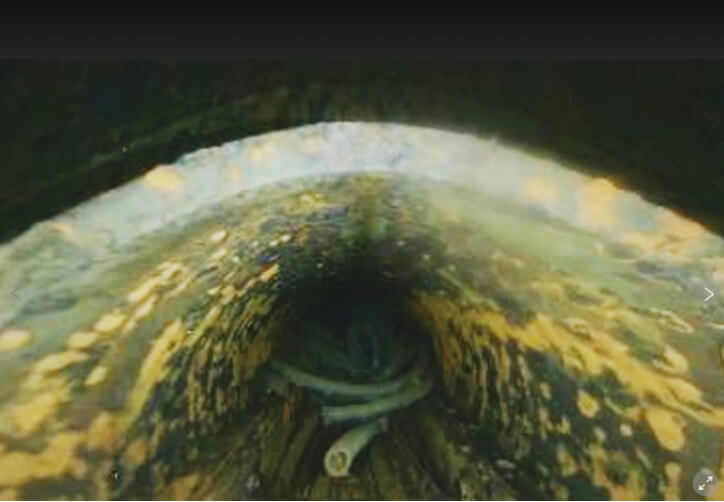
It is estimated that a total of 880 tons of fuel debris, consisting of molten fuel mixed with surrounding structural components, remains in the No.1, 2 and 3 units.
In the decommissioning timetable released in 2011, the government and the plant’s operator, Tokyo Electric Power Company, laid out a plan to begin removing radioactive fuel debris by 2021 and complete the work by 2036.The operator plans to begin full-fledged removal of the debris from the No.3 unit, but the starting year is expected to be pushed back to fiscal 2037 or later, far behind TEPCO’s initial target of completing the work by 2036. It is not clear whether the government and the operator will be able to achieve the decommissioning goal by 2051.
Meanwhile, at the Hamaoka plant, 200km south-west of Tokyo
A Japanese power plant operator has admitted to cherry-picking critical safety data to pass the screening process of the nuclear safety regulator to restart two of its offline reactors
Chubu Electric said on Monday that it had set up an independent panel of experts to investigate possible misconduct in compiling data as part of a process to restart two reactors at the Hamaoka nuclear power plant.The plant originally had five reactors but two were permanently shut down in 2009. The remaining three reactors were taken offlinein the wake of the 2011 Fukushima disaster.
Concerns about data manipulation mean the power plant is unlikely to restart anytime soon. It’s also a likely setback for Japan’s efforts to shift back to nuclear power to boost energy security. Chubu told regulators it had selected an earthquake wave model closest to the average of 20 possible patterns to calculate the Hamaoka plant’s “standard seismic motion”, the maximum shaking the reactors could withstand. However, the company admitted, employees in charge could have deliberately chosen that model to make the plant appear safer and speed up the screening process. The regulator learned about this after it was contacted by a whistleblower.
The Hamaoka power plant has been described as the “world’s most dangerous” nuclear power facility by some seismologists and anti nuclear campaigners. Government forecasts have predicted an 87 per cent chance of a powerful quake in the area, which sits on two major subterranean faults. A major accident would be likely to force the evacuation of Greater Tokyo, home to 28 million people.
One Japanese assessment stated that such an incident would devastate a broad area between Tokyo and Nagoya, destroying more than 200,000 buildings and resulting in a huge tsunami.
Is nuclear energy becoming popular again?
At its peak in the 1980s, nuclear power represented around 17% of the total global electricity generation mix, but its share began to wane after the Chernobyl disaster in 1986. After the Fukushima disaster, nuclear power dropped to roughly 9% of global electricity supply and has remained at about that level ever since.
Now, however, conditions appear to be primed for the construction of nuclear power plants to accelerate. In May, President Donald Trump signed executive orders to accelerate nuclear adoption in the US. By lowering regulatory and cost barriers to entry and providing funding for nuclear plants, the orders target an expansion of nuclear power in the US from around 100 GW today to 400 GW by 2050.
Meanwhile, China plans to build 150 nuclear reactors over the next 15 years, with the target of reaching 200 GW of nuclear power by 2035, according to China’s 14th Five-Year-Plan.
Why is nuclear energy growing?
There are currently 61 nuclear reactors under construction across 15 different countries, with roughly half of them located in China. Lee and Davenport’s report points out that 59 of those are scheduled to come online in or before 2032.
In addition, there are roughly 85 reactors planned across the globe, with another 359 proposed. “While we do not anticipate all of these planned and proposed reactors to come online.